After seeing firsthand how hard it is to keep a family member's healthcare organized — scattered notes, dense clinical language, missed follow-ups — I wanted to know whether others felt the same way before building anything. We heard from roughly 250 patients and caregivers, and the response was clear. Early testing begins now.
Full Report — March 2026
Read the complete update
Enter your details for full access — we'll keep you updated as NaviaCAIR grows.
Survey data from ~250 patients and caregivers
Top five challenges after doctor visits, with statistics
Early testing details — who can join and what to expect
What we're building and why
No spam. We respect your privacy.
I'm building NaviaCAIR after seeing firsthand how hard it is to keep healthcare organized for a family member. Scattered notes, dense clinical language, missed follow-ups, and the constant pressure of knowing you might be missing something important.
Before building a solution, I wanted to understand whether others felt the same way. The response has been clear.
What ~250 People Told Us
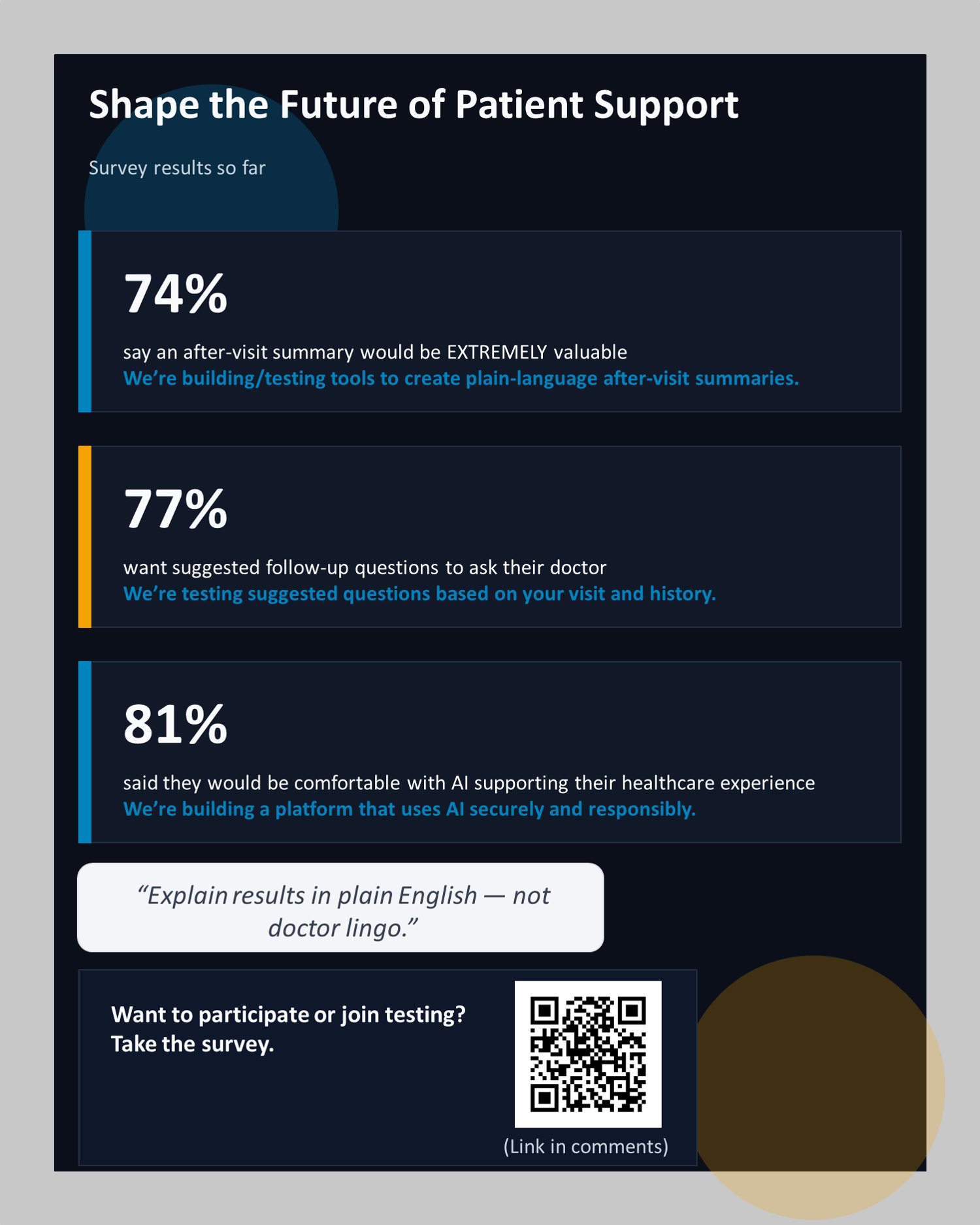
We've now heard from approximately 250 patients and caregivers about what's hardest during and after medical visits. The patterns are consistent and the demand is strong.
74%
say an after-visit summary would be extremely valuable
We're building this.
77%
want suggested follow-up questions to ask their doctor
We're testing this.
81%
are comfortable with AI supporting their healthcare experience
Responsibly built.
Survey results — Shape the Future of Patient Support
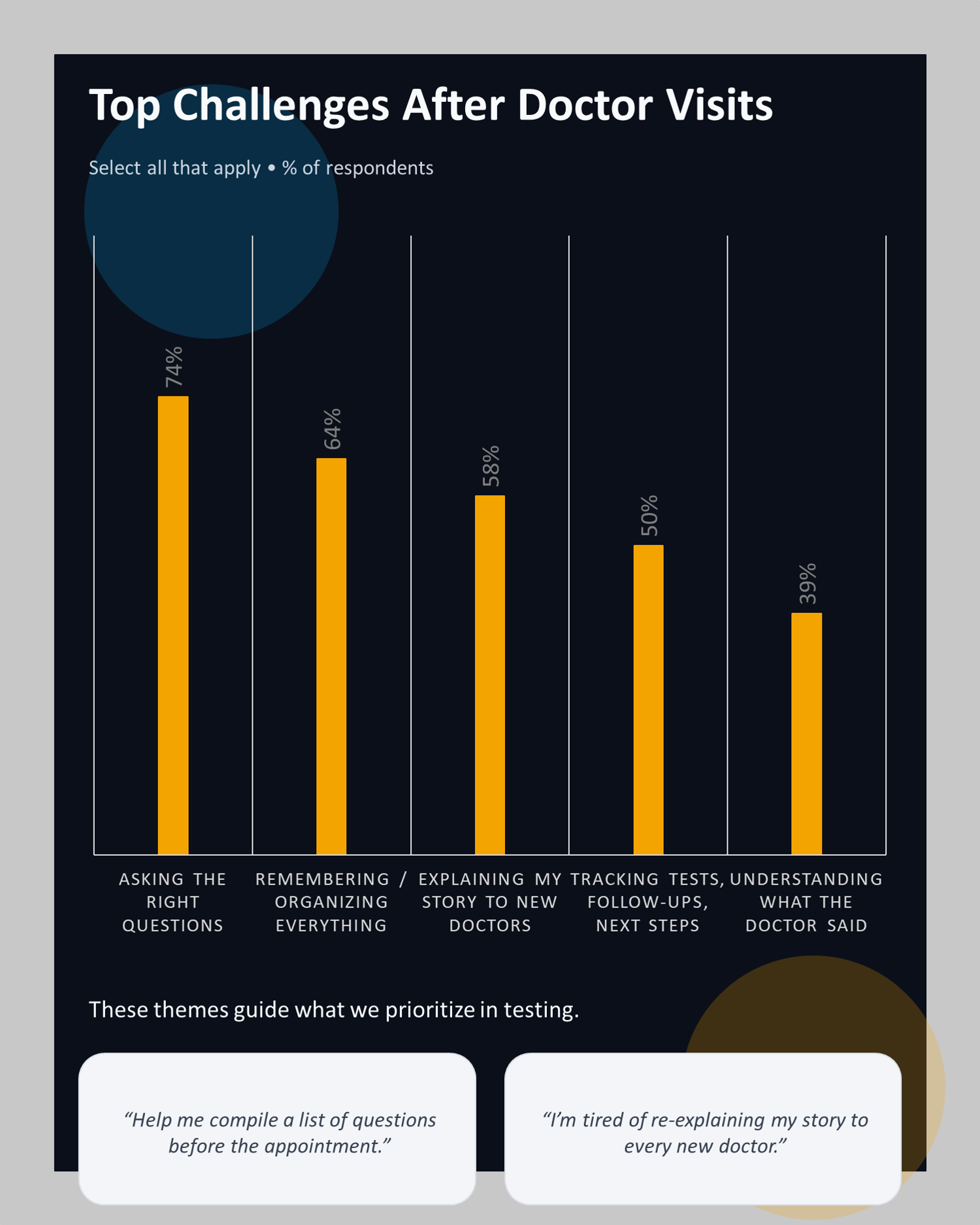
The Biggest Challenges After Doctor Visits
We also asked what's hardest in the time following a medical appointment. These five themes emerged most clearly — and they're directly shaping what we prioritize in testing:
74% — Asking the right questions
64% — Remembering and organizing everything
58% — Explaining their story to new doctors
50% — Tracking tests, follow-ups, and next steps
39% — Understanding what the doctor said
Top challenges after doctor visits — % of respondents
"Help me compile a list of questions before the appointment."
"I'm tired of re-explaining my story to every new doctor."
Add your voice to the research.
A few minutes helps ensure we're building something that actually works for patients and caregivers.
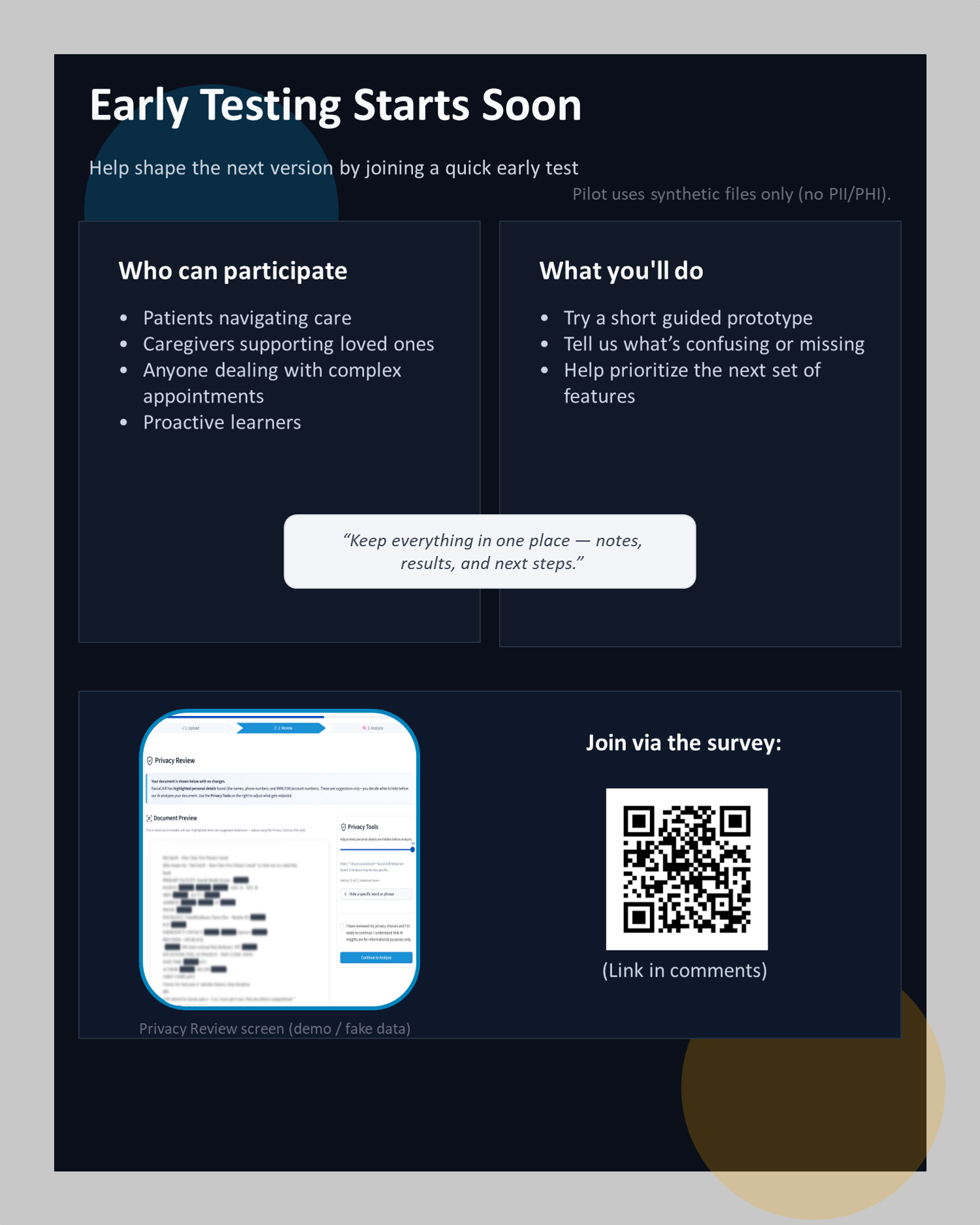
Based on what we've heard, we're ready to begin early testing of a patient-centric prototype designed to keep notes, questions, and next steps in one place.
The pilot uses synthetic files only — no personal health information required — and is open to:
Patients navigating care
Caregivers supporting loved ones
Anyone dealing with complex appointments
Proactive learners who want to be better prepared
Participants will try a short guided prototype, share what's confusing or missing, and help prioritize the next set of features.
Early Testing — synthetic data only, no PII/PHI required
What We're Building
NaviaCAIR is being designed to help patients and families transform complex, scattered medical information into plain-language summaries, better questions for appointments, and clear next steps.
The goal is not to replace clinical judgment — it's to make the time between appointments more organized, more informed, and less overwhelming.
Want to participate or add your input?
Fill out the questionnaire to join early testing or share your experience.